• 05/17/2016 4:10 PM | Deleted user

    By Sarah E Coleman

    MSEDA members give back to their equine communities in a number of ways, including scribing, stewarding, working with show secretaries and more. Some MSEDA members are lucky enough to volunteer at some of the biggest events in the country, including “The Best Weekend All Year:” The Rolex Kentucky Three-Day Event. Find out what integral roles three MSEDA members play to keep the event running smoothly. 

    Erin Woodall: Chief of Saturday Cross-Country Groom Shuttle

    Erin Woodall has been involved with Rolex for the past 20 years, 10 years as a driver for the shuttle and 10 years as the Chief of the Groom’s Shuttle. Erin had been involved in various volunteer roles with Rolex before becoming a shuttle driver. On how she got such an interesting volunteer role, Erin explains “Judi Tudor … put me in a truck and said ‘drive!’”  

    As Saturday is one of the busiest days of the show for riders, grooms and owners, shuttle drivers provide transportation from the vet box and back for both the people and all the equipment necessary for a competitor in the vet box.

    Erin thinks that talking with the riders, grooms and owners is the best perk of her job at Rolex. The people she shuttles have a range of emotions from excitement, deflation and elation, depending on how their rider/horse goes. “Everyone is so appreciative of our group donating our time and use of our personal vehicles,” she says. “The groom shuttle team has grown to be a family who have our reunion at Rolex each year.”

    The hardest part of the shuttling job, Erin says, is “not expanding the Groom Shuttle force to 50! I have so many offers from people who want to help, but our crew keeps coming back year after year, and openings are few and far between.” What a great problem to have!

    Mary Fike: Stable Manager

    Mary Fike has been the Stable Manager at Rolex for the last 34 years. She stepped into the role when Edith Conyers, executive director of Rolex from 1976 to 1985, asked her to be the stable manager after TDing Mary’s Painted Stone Horse Trial in 1982.

    The role of stable manager includes a lot of moving parts, not the least of which includes stall assignments and stable credentials. Another main responsibility of the stable manager is to act as a liaison between competition management and the competitors and owners to ensure they have the best Rolex they can. Mary works very closely with Vanessa Coleman, the Competition Manager of Rolex, because her office has become the Show Office for the competitors. Another way Mary keeps competitors happy? “We have the best coffee and donuts for them every morning!”

    Mary says that the best part of being Stable Manger is helping the horses and riders. “We have the live feed in the office, and that’s where they come to watch—unless they’re out on the field of play. I get to be part of their ‘talking shop,’ and for the past few years, Sally O’Connor has watched the Saturday cross-country in my office. It’s been wonderful to be able to have her commentary live!”

    The hardest part of the Stable Manager’s role is having to say no, she says. People in the office have to act as the intermediary with people who want to get into the barns “just because.” Over the years, Mary has come to know most of the people and can usually tell when someone has a real reason to go into the barns. “Occasionally we get someone who is rude or unpleasant, but not often,” she says.

    This year, Mary was featured on the USEF Network! Click here to watch the video on Facebook.

    Megan Carr: Vet Box 

    Megan Carr has been running the End of Phase D/Vet Box at Rolex since 2011. The vet box is a very busy place to be. Once the horses come off cross country, they’re examined by a group of international vets (this year it was Drs. Catherine Kohn, Karen Nyrop, Duncan Peters and Jennifer Miller). Megan is responsible for providing six vet scribes, in two shifts, for the vets to record all the horse’s vitals. Also in the box is a competitor hospitality tent, logistics (which includes ice and water for the horses) and security (since this is a high-activity area, only people with the proper credentials are allowed in)—that’s a lot to coordinate!


    “The best part of this role is the amazing crew I have gained over the past six years! This year went off almost without a hitch, and it’s really because I have a crew who work so well together and is so efficient.” The hardest part of her role is problem solving, Megan explains. “There is a lot that can be planned ahead of time, but there are always things that pop up. One year, we had zero electricity, so we had no coffee, which people where not happy about! Some things just can’t be planned for. Also, for the past two years: THE WEATHER!”

    Volunteering is a wonderful way to give back to the sport, and there are many exciting volunteer opportunities at Rolex. Getting to see the behind-the-scenes workings of the only four-star event in North America is an added bonus! If you’re interested in volunteering, it’s helpful to speak with someone who already volunteers, or click here for more information: http://rk3de.org/competition/returning-volunteer-login/


  • 05/16/2016 9:04 AM | Deleted user

    While most people see lush, green grasses as a hallmark of spring, many horse owners see bright green warning signs dotting Kentucky fields.

    By Sarah E. Coleman

    The heavy rains we’ve gotten in Kentucky this spring have led to rich, lush grasses in many pastures and fields. For those who own easy-keeping equine companions, the bright green fields, while lovely to look at, could be a potential disaster. 

    Horses that “get fat on air” have a higher insulin response, meaning they are at a greater risk of developing laminitis. It has been theorized that this greater insulin reactivity is an evolutionary response from when forage was difficult to come by or of poor quality. When these conditions occurred, it was necessary for a horse to release greater amounts of insulin to support body condition.

    When food was plentiful, the increased insulin response allowed horses to lay down more fat, which in turn helped them survive harsh winters. While helpful years ago when herds were wild, this insulin response can be frustrating for modern-day horse owners.

    The intake of high-quality pasture (sometimes constant if your horse is out 24/7) that is high in non-structural carbohydrates (NSC) can create sustained levels of high insulin, which can contribute to pasture-associated laminitis. Studies have shown that maintaining very high levels of insulin for 48 to 72 hours in otherwise “normal” horses will reliably cause laminitis. (Asplin et al., 2007, de Laat et al 2012).

    The Signs of Laminitis

    A very painful condition that affects the laminae in a horse’s hooves, the terms “founder” and “laminitis” are typically used interchangeably, but “founder” generally references outwardly visible signs on the hoof, such as founder rings.

    While many of us are well versed in what a stereotypical founder case looks like, recent research has indicated that what had once been considered a hallmark of the disease, the “founder stance,” is actually found in less than 50 percent of cases. In this position, a horse stands with his legs stretched far out in front of him, rocking back on his hind legs to alleviate as much weight bearing as possible on his front limbs.


    In a British study of 381 laminitic horses, laminitis was found to occur in all four feet, but both front feet were most commonly and most severely affected, followed by the right fore alone, the left fore alone, then the right hind and left hind, then all four feet. http://www.scarsdalevets.com/wp-content/uploads/2016/02/DocsEquineCareAboutLaminitis2016.pdf

    Although there were no individual signs present in all577 cases used in a 2013 study, the most common signs included:

      - difficulty turning
      - increased digital pulse
      - short, choppy walk


    Because some of these common laminitis signs could easily be confused with other conditions (like arthritis), it’s important to be vigilant in the observation of horses turned out on lush grasses.

    Becoming familiar with your horse or pony’s normal temperament, gait, hoof temperature and digital pulse will help you notice any abnormal changes. Be aware that the above clinical signs, though being common, don't always occur in every case, so it’s important to also keep an eye out for general discomfort and foot lameness.

    Do All Grasses Cause Laminitis?

    Not all grasses are harmful to horses. Classified as either cool- or warm-season, depending on how and when they metabolize and photosynthesize sunlight, specific grasses pose health threats at different times of the year. In the spring, cool-season grasses like tall fescue, timothy and orchardgrass are the main concerns for horse owners.

    How to Prevent Laminitis

    Horses prone to laminitis are those that are overweight or those that have metabolic issues. If your farm has a plethora of these grasses and your horse is prone to laminitis, the following precautions are recommended:

    -  Adapt him to new spring grasses gradually (start with one hour and increase by 30 minutes each day)

    -   Place a muzzle on your horse at all times when he’s turned out
    -   Put him in a drylot
    -      If you don’t have access to a drylot, only turn your horse out in the very early morning while wearing a muzzle

    Take lateral X-rays of your horses feet twice a year to monitor coffin bone position
  • 04/25/2016 9:24 AM | Deleted user

    By Sarah E Coleman

    Each year, the Mid-South Eventing and Dressage Association hosts a plethora of year-end awards.  Detailed information about all of the award categories and eligibility and qualifications are listed in the Rules and Guidelines. Below is a brief overview of the award categories, and special awards that MSEDA offers each year at the awards banquet.  To be eligible for any MSEDA awards, members must take note of the following:

    1. The Competition Year begins on November 1 and runs through October 31 of the following year.
    2. The rider must be a member in good standing and fulfill the minimum volunteer hours: 8 hours total, 4 of which must be completed at either the Mid South Dressage Show or Mid South Team Challenge.
    3. Complete a membership form the horse/rider combination. Points accrue only after activation date is in effect.

    The MSEDA awards include:

    Horse Trial Awards
    Horse Trial Awards are given through fifth place (MSEDA reserves the right to combine sub-classifications if there are fewer than five qualifiers). They are offered in the following categories:

    HORSE TRIALS/EVENTS

    a) Starter - Junior

    b) Starter - Senior

    c) Starter - Master

    d) Beginner Novice - Junior

    e) Beginner Novice - Senior

    f) Beginner Novice - Master

    g) Novice - Junior

    h) Novice - Senior

    i) Novice - Master

    j) Training - Junior

    k) Training - Senior

    l) Training - Master

    m) Preliminary - Young Rider

    n) Preliminary - Senior

    o) Preliminary - Master

    p) Intermediate

    q) Advanced

    Additional horse trial awards are given that recognize the following:

    * Eventing High Point Award - Midnight Sam Memorial Trophy - Awarded to the horse who has amassed the highest number of points in eventing during the competition year. ** This award consists of a perpetual trophy as well as an individual trophy.


    * High Point Eventing Mare - The Philosopher Trophy - Awarded to the mnare who has amassed the highest number of points in eventing during the competition year. ** This award consists of a perpetual trophy as well as an individual trophy.


    * Eventing High Point Junior Rider - The Craig Bryant Memorial Trophy - Awarded to the rider under age 18 who has amassed the highest number of points in eventing during the competition year.


    * Eventing High Point Young Rider - Awarded to the rider aged 18 to 21 who has amassed the highest number of points in eventing during the competition year.


    * Eventing High Point Senior Rider - The Bennet Trophy - Awarded to the rider age 22 - 49 who has amassed the highest number of points in eventing during the competition year.


    * Eventing High Point Master Rider -- The Helmut Gratz Trophy - Awarded to the rider age 50 and over who has amassed the highest number of points in eventing during the competition year.


    * Outstanding Horse Trials/Event - Must be sanctioned by MSEDA. This award is determined at the annual awards banquet by nomination and vote of the general membership.

    The Grasshopper Trophy – Awarded annually to the high point MSEDA offtrack thoroughbred in the eventing division. The horse must be tattoed and nominated for eligibility to MSEDA prior to the end of the competition year. It is the responsibility of the member wishing to be considered for this award to notify the points secretary of eligibility. The award is based on eventing (not Combined Test) points. The member must also meet the volunteer hours requirement in order to be eligible.

    *Pony Club Award - Given to the MSEDA member in good standing who accumulates the highest number of points and is also a member of a recognized pony club. It is the responsibility of the member wishing to be considered for this award to notify the points secretary of eligibility. Points begin accumulating upon notification of the points secretary.

    * Hall of Distinction Award – Awarded to any MSEDA member in good standing who has completed an FEI competition. A trophy will be presented in the initial year of induction. Any subsequent FEI completions will be recognized at the Annual Meeting. It is the responsibility of the member to notify the points secretary and provide proof of each FEI completion.

    Please click here for more information. 

    Combined Test Awards

    Combined Test Awards are given through fifth place (MSEDA reserves the right to combine sub-classifications if there are fewer than five qualifiers). They are offered in the following categories:

    COMBINED TEST

    a) Starter - Junior

    b) Starter - Senior

    c) Starter - Master

    d) Beginner Novice - Junior

    e) Beginner Novice - Senior

    f) Beginner Novice - Master

    g) Novice - Junior

    h) Novice - Senior

    i) Novice - Master

    j) Training - Junior

    k) Training - Senior

    l) Training - Master

    m) Preliminary - Young Rider

    n) Preliminary - Senior

    o) Preliminary - Master

    p) Intermediate

    q) Advanced

    Dressage Awards
    Dressage Awards are given through fifth place (MSEDA reserves the right to combine sub-classifications if there are fewer than five qualifiers). They are offered in the following categories:

    a) USDF Walk Trot - Junior Rider
    b) USDF Walk Trot - Senior Rider
    c) USDF Walk Trot - Master Rider
    d) Training Level - Junior Rider
    e) Training Level - Senior Rider
    f) Training Level - Master Rider
    g) First Level - Junior Rider
    h) First Level - Senior Rider

    i) First Level - Master Rider
    j) Second Level
    k) Third Level
    l) Fourth Level
    m) Fifth Level
    n) FEI
    o) Musical Kur

    Additional dressage awards are given that recognize the following:

    * Dressage High Point Award - Awarded to the horse/rider combination who have amassed the greatest number of points competing in dressage during the competition year.


    * Dressage High Point Junior Rider - Awarded to the rider under age 18 who has amassed the greatest number of points competing in dressage during the competition year.


    * Dressage High Point Senior Rider - Awarded to the rider age 22 - 49 who has amassed the greatest number of points competing in dressage during the competition year.


    * Dressage High Point Master Rider - Awarded to the rider age 50 and over who has amassed the greatest number of points competing in dressage during the competition year.


    * Dressage High Point Adult Amateur - Awarded to the amateur rider over age 21 who has submitted a copy of his/her USEF amateur card to the Dressage Points Chair and amassed the greatest number of points competing in dressage during the competition year.


    * FEI Certificate of Achievement - Awarded to any rider who has achieved a minimum score of 57% at the FEI level at an USEF/USDF- recognized competition. A copy of the qualifying test, including judge's signature, must be submitted to the MSEDA Dressage Points Chair in order to be eligible.


    * Dressage High Point Mare - The Tundra Memorial Trophy - Awarded to the mare who has amassed the greatest number of points in dressage during the competition year. ** This includes a perpetual trophy as well as the individual trophy.


    * Dressage Company's Musical Kur - Awarded to the horse who has amassed the greatest number of points at musical kur competitions during the competition year.


    * Outstanding Dressage Show - Must be sanctioned by MSEDA. This award is determined by nomination and vote of the general membership at the annual awards banquet.

    * Pony Club Award - Given to the MSEDA member in good standing who accumulates the highest number of points and is also a member of a recognized pony club. It is the responsibility of the memberwishing to be considered for this award to notify the points secretary of eligibility.

    * Hall of Distinction Award – Awarded to any MSEDA member in good standing who has completed an FEI competition. A trophy will be presented in the initial year of induction. Any subsequent FEI completions will be recognized at the Annual Meeting. It is the responsibility of the member to notify the points secretary and provide proof of each FEI completion.

    Please click here for more information. 

  • 04/18/2016 11:10 AM | Deleted user

    By Mary Fike

    Ever wonder why some out of area USEF shows count for points and others don't? There are two ways that those shows get MSEDA sanctioning.

    • The Organizers have been asked by many of their competitors to sanction with MSEDA. If an Organizer can be convinced that they have a strong MSEDA presence in their entries, they might consider it.
    • The competitors pay the sanctioning fee themselves. If you know you are competing out of the area, consider sanctioning the event yourself.
    Here are the costs involved:
    -  $25 at least 3 months before the show.
    -  $55 less than 3 weeks before the show.
    -   $100 Post-Sanctioning Fee for USEF Shows or Events

    If you are sanctioning 3 or more competitions, a discount of $5.00 per event will be offered if all applications are submitted at the same time.

  • 04/07/2016 8:08 AM | Deleted user

    By Sarah E Coleman

    Natural disasters are not pleasant to think about as a home owner, but add a farm with an assortment of animals and outbuildings into the equation, and preparation takes on an even more prominent role in diverting disastrous consequences. 


    Step One: Gather Information

    The types on natural disasters most likely to occur vary by region of the country. Here in Kentucky, we are most likely to see tornadoes and flooding before we will see out-of-control wildfires and hurricanes. Other types of disasters do occur here, however, though they may not readily spring to mind. These can include chemical spills, barn fires and explosions.

    Some of the things you need to prepare for a natural disaster include:

    • Make a list of farm inventory. While this might seem like overkill, if the worst does happen, you’ll be one step ahead of the game when it comes to dealing with insurance companies and filing a claim. On this inventory list, you should record the number and type of animals on the farm; any crops you may have; the make and model of all machinery; and any hazardous substances stored on the farm (fertilizer, fuel, medicines, etc.).
    • Keep a list of emergency phone numbers, and update them regularly. This would include the numbers of your local veterinarian, your insurance agent, local fire and police, and the contact numbers of any boarders you may have at your farm.
    • Create an evacuation plan. If you don’t have the means to remove all the horses from your farm on the trailers located on the property, locate additional trailering resources and their cell phone numbers, and find out just how many horses they can help you remove from your property.
    • Install a weather app on your phone, whether or not you can hear emergency sirens from your farm. 

    As Stormy Weather Approaches....

    While it’s one more thing on the to-do list, it’s helpful to contact your insurance agent yearly and go over any additional purchases you have made and determine if you need additional coverage. It might be worthwhile to investigate “all-hazard” insurance, which covers flood and hail damage, as well as some other non-traditional issues.

    Next you will need to stockpile supplies in preparation for a weather-related event. This would include everything from ensuring that the animals have a multiple-day supply of feed and hay; making sure you have extra fuel for tractors and vehicles; that fire extinguishers are available and charged in all barns; and that hand tools and first-aid supplies are readily accessible. Also important is a working generator and extra fuel.

    And don’t forget your two-legged family, as well. Easy-open containers of food; bottled water; a flashlight and extra batteries; and a well-stocked first-aid kit are all essential if a disaster occurs.

    Additional Precautions

    If you have employees on the farm or if your barn has boarders, it’s important to review with them the plan on what to do in case of a natural disaster. Where is the safest area to shelter in place or where will you evacuate to if flood waters are rising? What happens to the horses—are they turned out or left in the barn? Be sure to establish a phone tree so that if the worst does happen, you’re able to quickly update owners on their horses.

    While most farms have access to city water, it is not a bad idea to have a hand pump available to ensure a clean water supply. In many natural disasters, municipal water supplies become contaminated and unsafe to drink.

    If you know strong winds and/or tornadoes may be in the forecast, be sure to secure any items that may become flying objects, like feed troughs, barrels, jumps, and similar items. It is also worth considering putting halters (the breakaway kind) on horses before a weather-related event occurs. 

  • 04/06/2016 9:47 AM | Deleted user

    By Sarah E Coleman

    Ah, spring. While most of us are relishing seeing our horse’s fuzzy winter coats go by the wayside, we’re not as welcoming to one of the side effects of spring rains: mud!

    While some mud is inevitable on almost every farm, it is possible to limit its occurrence with some strategic planning. 

    Health & Safety Hazards

    There’s nothing quite like losing shoes (yours and your horse’s) to make resentment of spring rains bubble over. Is your trailer parked in the back 40? Be prepared, it may be buried when it sunk into rain softened grounds.

    In addition to being hazardous to safety, mud can create a health hazard for your horse if he has to stand it in with no ability to move to higher ground.  Not only is it hard on his hooves and legs, potentially causing everything from thrush to scratches, pooling water is a breeding ground for mosquitoes and flies, which can carry an assortment of diseases. 

    Defensive Tactics

    Combating mud on your farm can seem an exercise in futility, but here are some long-term strategies to help eliminate the sticky stuff.

    • Create a sacrifice lot that will keep all of your pastures and paddocks from turning into muddy quagmires, if you have enough space. In a perfect world, this area would be on higher ground, away from streams and ponds.
    • Install rain gutters and downspouts on barns and outbuildings. These help direct water away from paddocks and foundations.
    • Fence horses out of streams, ponds and low-lying areas on your farm. Hooves trample embankments and shorelines, creating an ever-expanding muddy shoreline.
    • Place bridges over low-lying areas in walkways between paddocks so you’re not constantly walking through a muddy bog to retrieve horses.
    • During the warmer season, don’t allow horses to graze growing grass too short. Grass without a good root system in place loses its ability to prevent runoff and is easily trampled into mud.
    • Remove manure around heavily trafficked areas like waterers, hay feeders and gates at least once a week.
    • Consider installing French drains, which intercept water flowing through paddocks and pastures using trenches filled with gravel, then flows toward a specific outlet.
    • Place sand, gravel or wood chips around gates, waterers and feeders and even in run-in sheds. These materials are always more effective when used on top of landscape fabric to prevent them from sinking into the soil. A good rule of thumb is to put down twice as much footing as you have mud, generally at least 6 inches deep.
    • Investigate soil stabilizing grid systems that allow grass to grow through the grid, protecting roots and preventing mud. Many farms use these around gates, waterers and hay feeders.
    • Move hay feeders periodically so horses are not chronically forced to stand in mud to eat. This will allow the muddy areas to dry out while horses spend their time elsewhere.
    • Plant trees and shrubs. Thought not immediately beneficial, plants use a lot of water and can reduce the standing water on your farm. Planted around paddocks (make sure they are equine-safe), shrubs can keep them drier and reduce runoff. 
  • 03/20/2016 8:11 PM | Deleted user

    By Sarah E Coleman

    Each issue, MSEDA will highlight a member who is active in the organization to give other members a peek into their horse-loving lives. Interested in being featured? Email Sarah at redhorseentrprise@gmail.com

    MSEDA: Where are you from?

    ES: My wife, Jill, and I live in Westfield, IN, just north of Indianapolis. We've been here exactly 20 years this week, and lived on our farm for the last 11. We came to Indiana for Jill's job as an elephant trainer. She's been with the Indianapolis Zoo elephants ever since.
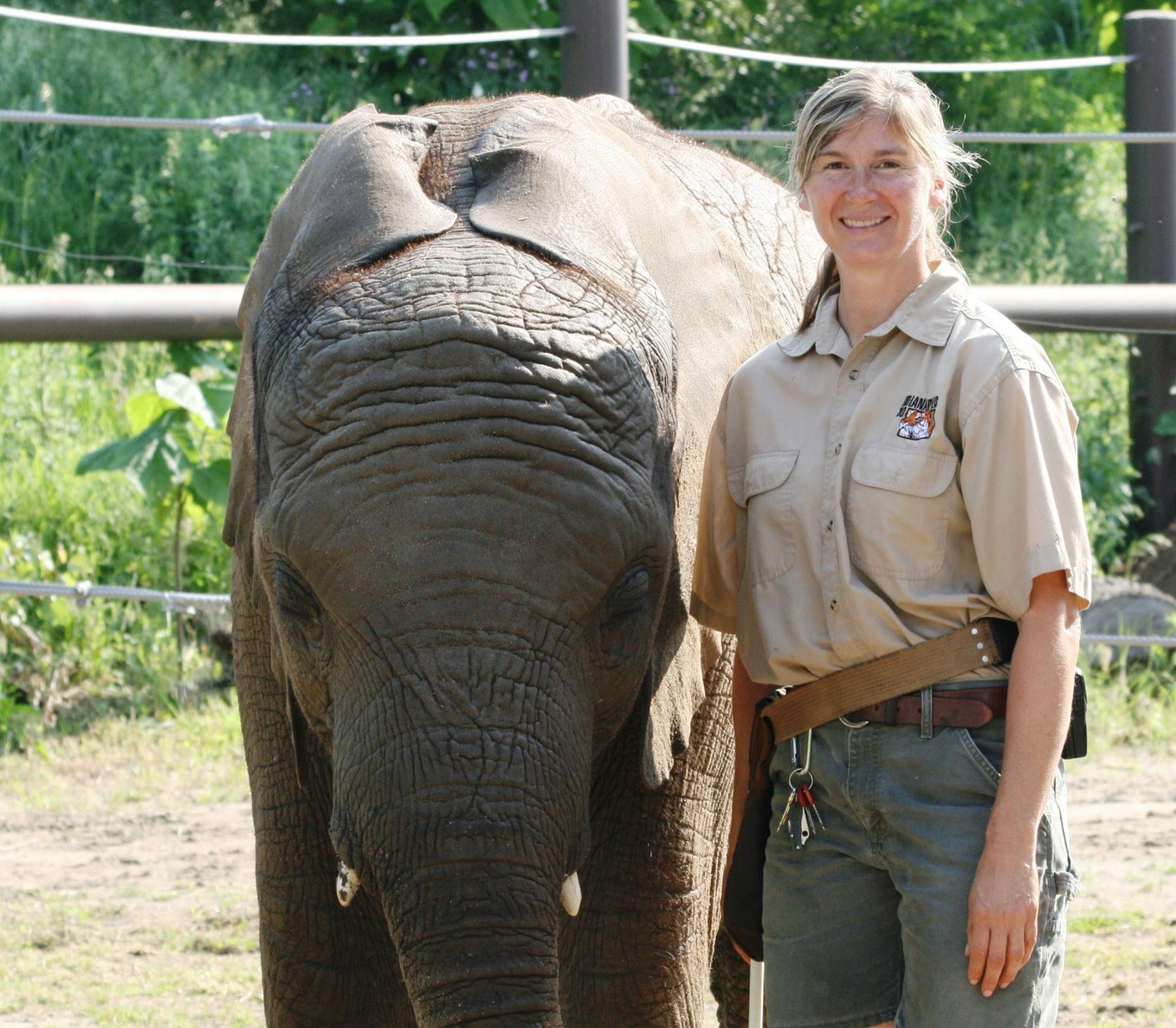
     

    Jill with Zahara, one of the six African elephant calves born at the Indianapolis Zoo

    MSEDA: When did you begin riding?

    ES: I started, um, later in life than most people. I was 34 or so when I first sat on a horse. But then I saw a video of eventing (Dorothy Crowell, riding Molokai at The Hague) and thought "this is something I have to try."


    MSEDA: How long have you been competing?

    ES: This year I am hoping to compete in my first-ever recognized horse trials. I've been competing at schooling shows the last 4 or 5 years.


    MSEDA: When did you get your first horse?

    ES: Ah, Monty the Morgan. The perfect first horse was purchased in the late 90s. He was 17 years old at the time and had the patience of a saint.


    MSEDA: What horses do you own now?

    ES: We have three horses at home now. Elvis, the wonder horse, a Thoroughbred who, at 24 years old, regards anything lower and slower than training level as insulting. Tardis, my 7-year-old OTTB who is really starting to learn his new job, even if he hasn't found his brave just yet. And Doc, my 31-year-old Dutch cross, who is truly enjoying retirement.
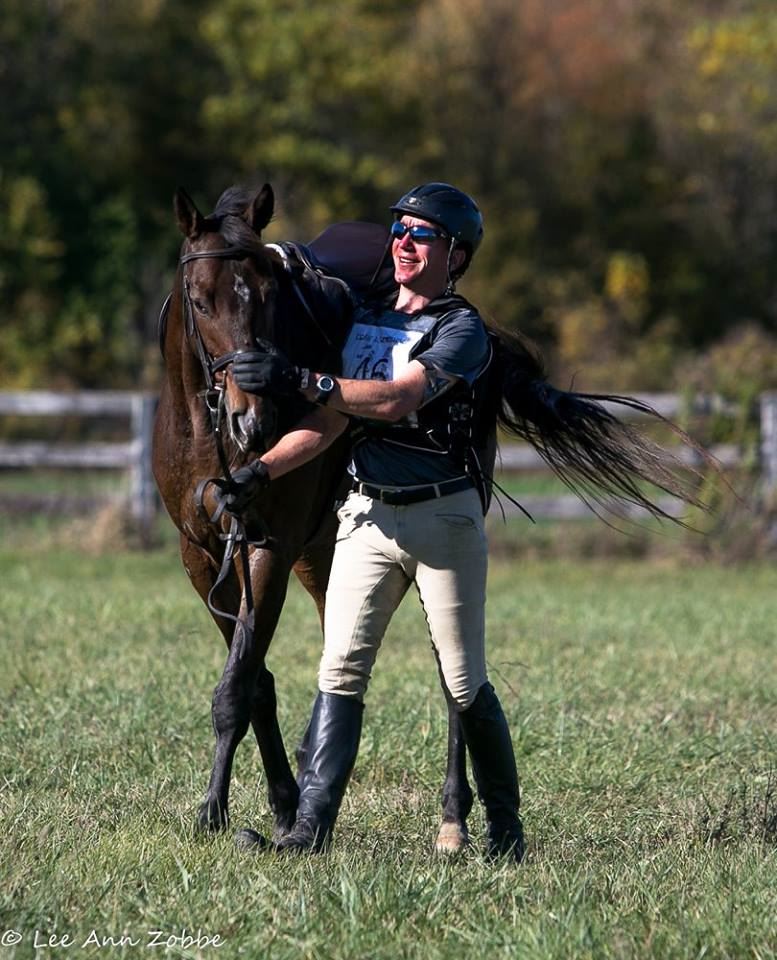

    Celebrating a clear starter XC round with little Tardis. Photo by Lee Ann Zobbe, used with permission.

    MSEDA: How did you get your horses? What horses do you compete (and what do you compete in?)

    ES: Elvis came to us permanently a little more than a year ago, after we leased him for a while. His owner, the wonderful Mary Tinder, made the difficult decision to get out of horse ownership, and astoundingly picked our barn as this remarkable horse's final home. To say we are honored is a profound understatement. Elvis now has the unenviable task of getting me to my first recognized horse trials. Tardis came to me by way of one of my all-time favorite professionals, Sharon White.
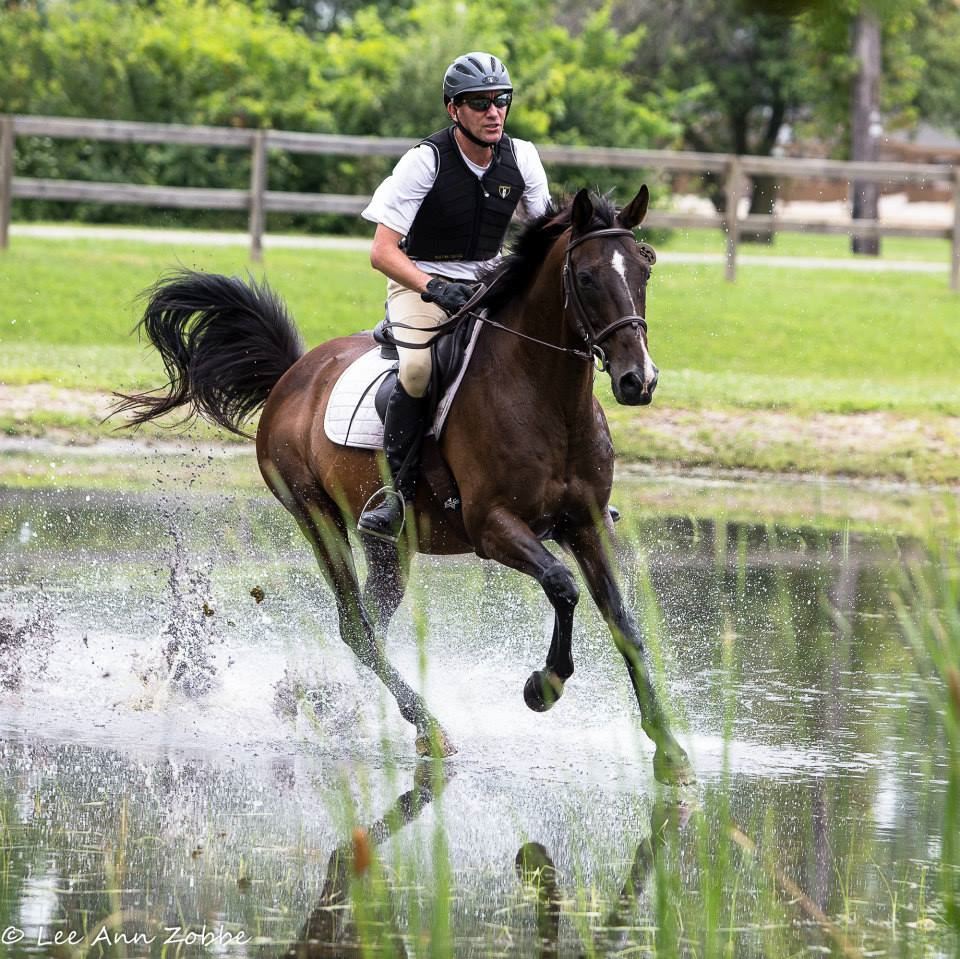

    Eric and Elvis compete in the Derby to raise funds for the new Indiana Eventing Association's water complex at the Hoosier Horse Park. Photo by Lee Ann Zobbe, used with permission.


    MSEADA: What are your horse's favorite treats?

    ES: Anything, pretty much. Both Thoroughbreds are total treat hounds.


    MSEDA: What do you do full time? Do you enjoy it?

    ES: So, my full-time job is as the journals manager for the American Statistical Association (ASA, the second-oldest nonprofit scientific association in the United States.). I manage all of the Association's peer-reviewed journals. It's a perfect job for me and allows me to work from home.

    My second job, and how I came to the MSEDA, is as a horse show announcer working primarily eventing and dressage shows. I've never competed in an MSEDA show, but members might recognize my voice from Spring Bay, the Kentucky Classique and Team Challenge.
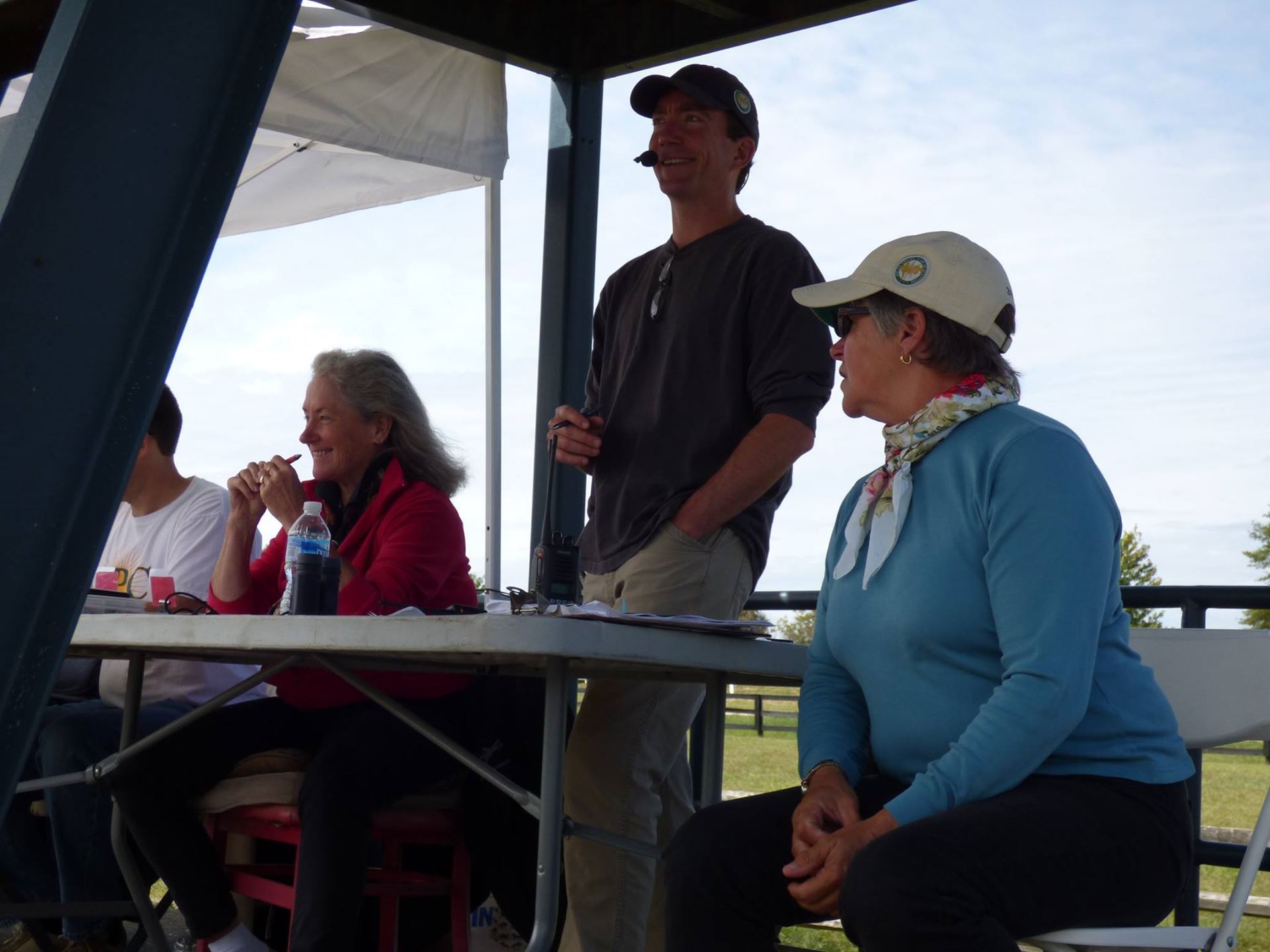

    Eric announcing cross-country at the Kentucky Horse Park, with JJ Johnson (left) and Karen Winn. Photo by Leigh Anne Robertson, used with permission.

    I love my announcing job, especially when working at the Kentucky Horse Park. It really is special---and I'm always a bit awestruck---driving past the statue of Man O' War as I'm going to work. I also announce in Georgia, Texas, Indiana and Illinois. I currently serve on the MSEDA Board of Directors, representing the northern part of Area VIII. I also serve on the board of the Indiana Eventing Association.


    MSEDA: How did you get into this job?

    ES: I've been working for the ASA for … a very long time! I got into announcing first by volunteering at dressage shows, and it morphed into something really unique and fun. I owe fellow announcer Cyndi Kurth (who also works at MSEDA shows) a real debt for patiently mentoring me on how to announce and how to best help the show organizers.


    MSEDA: What are your goals for the 2016 season and with whom do you ride?

    ES: My goal this year is to ride Novice at a recognized show. My second goal is to have Tardis competing Beginner Novice at schooling shows. I have the BEST coach, Lee Ann Zobbe, in Sheridan, IN, at Come Again Farm. I try to take two or three lessons a week, splitting them between the two horses. And it is through Lee Ann that I've been able to ride in clinics and eventing camps with Dorothy Crowell, Lauren Lambert, Leslie Law, Leslie Grant-Law, Sharon White and others. It's been an amazing journey.


    MSEDA: What are your favorite brands?
    ES: Mavorite eventing store is IndyEquestrian (
    https://www.indyequestrian.com/). Amanda and Brian are the best---they know the sport and what riders need.


    MSEDA: What is your favorite part of you’re the barn where you lesson?

    ES: I love riding at Come Again Farm, and trailer up there (20 minutes--I am spoiled!) a few times a week. The people at CAF have become sort of a second family for us, and we love the facility and schooling shows that are held about once a month during show season.


    MSEDA: What other animals do you own?

    ES: Just two barn cats and a house cat … between the horses and elephants, we enjoy a lot of critter company!


    MSEDA: Is there anything unusual about your horses now?

    ES: All three of my horses seem to possess an over-abundance of personality. I am fortunate that Elvis is a benevolent dictator and manages the herd firmly, but (for the most part) gently.

  • 03/20/2016 9:01 AM | Deleted user

    By Sarah E Coleman

    MSEDA sponsors two scholarship opportunities to members in good standing who wish to expand their equine education: The MSEDA General Education Grant and the Christine Brown Memorial Grant. 

    The MSEDA General Education Grant is $500 scholarship that can be used for anything related to equine education. The recipient for 2015 was Anastasia Curwood, who used the grant to go South and complete some dressage training. As a give-back, she will be bringing in Sandy Osborn for a MSEDA-sponsored clinic in November of this year. In 2014, Reese Koffler-Stanfield was the grant winner.

    The Christine Brown Memorial Grant is a 2-year-old scholarship of $1,500 that can also be used for equine educational activities. The 2015 grant was awarded to Katie Hagerty, who is using it to be in Florida from January through mid-April with her trainer, Ali Knowles. Katie is trying to get one of her two horses qualified for the 2* North American Junior and Young Rider Championship in Colorado this summer! The 2014 Grant winner was Kaileigh Nida, who used her grant money to travel to Florida as a working student for 2 1/2 months and also worked with her event horse schoolmaster Houdini, who was given to her from Tracy Corey. Kaileigh also had weekly training from Pete Rodda, a Level 2 Parelli instructor. Kaileigh put her training to use and earned a top award in her 4-H horsemanship competition in 2015.


    To be eligible, MSEDA members must complete 8 volunteer hours, and half of them must be completed by the person applying for the grant. The remainder of the hours can be donated. 

    MSEDA currently funds both of these grants. To apply, candidates must describe how they plan to “pay back” the equine community for their scholarship in a way that might benefit MSEDA or through a program related to the scholarship activity. The deadline for both scholarships is December 15. The application can be found here: https://mseda.org/resources/Documents/MSEDA_SCHOLARSHIP_APPLICATION%202015%20(5).pdf

    Grant recipients are determined during an educational committee meeting and are awarded at the MSEDA Annual meeting. Recipients are notified before the banquet takes place. 

    Scholarship winners are asked to submit a report about their educational experience within three months of completion. These pieces are then used in the MSEDA newsletter and shared on the MSEDA Facebook page. 

  • 03/20/2016 8:47 AM | Deleted user

    By Jen Roytz

    It’s hard to believe it’s that time of year again. Spring. That means spring cleaning, springing forward with our clocks and, of course, spring vaccinations for our horses.

    Core vaccinations are simply vaccinations against diseases that are the most common risks to our horses’ health in their given region, pose the most significant risk to a horse’s health if infected and/or are required by law. According to the American Veterinary Medical Association (AVMA) and the American Association of Equine Practitioners (AAEP), core vaccines include the following:

    -        Eastern/Western Equine Encephalomyelitis
    -        Rabies
    -        Tetanus
    -        West Nile Virus

    Vaccinations for additional diseases can be given on a risk-based, as-needed basis. This means that the disease might be prevalent in your area; there has been a recent outbreak or history of outbreaks in your area or an area in which you ship;  or that your horse has shown previous susceptibility to a specific disease. Risk-based vaccinations include, but are not limited to:

    -        Equine Herpesvirus (EHV)
    -        Influenza
    -        Streptococcus equi (Strangles)
    -        Rotovirus
    -        Potomac Horse Fever (PHF)

    Information on risk-based vaccination types and schedules can be found at http://www.aaep.org/custdocs/AdultVaccinationChart.pdf?osCsid=bnlmf3d1ou3j3dpfvppdj713i0

    Of significant interest to many horse owners, especially those who ride in or stable their horses near forests, tall grass or particularly dense brush is Lyme disease. Just as with humans, horses can contract the disease from the bite of an infected tick. Also as with humans, the disease can have severe effects on horses.

    While the bulls-eye pattern seen in humans at the site of a tick bite to signify Lyme disease isn’t visible in horses, there are signs to look for. Not all horses will show signs of infection, those that do may present initial clinical signs that mirror those of other diseases, including low-grade fever, lethargy, undiagnosed sporadic lameness, swollen joints, neck or back pain and weight loss, tests can be done to diagnose whether or not the cause is Lyme disease, as well as whether it is in the early or chronic stages of the infection.

    If a horse is infected with Lyme disease, a one to two month round of antibiotics will be prescribed. If left untreated, the disease can significantly impact a horse’s organ and neurological health.

    Currently, there is not an approved vaccine for horses for Lyme disease. Some veterinarians use the commercially available canine vaccine for Lyme disease for their equine clients.

    Prevention is a horse’s (and horse owner’s) best protection against the disease. Owners should use insect repellent (those based on Permethrin or Pyrethrin have shown particular efficacy) and should check their horses for ticks regularly, especially under the mane, under the tail, and on their throat, ears and stomach.

  • 03/08/2016 9:55 AM | Deleted user

    By Sarah E Coleman


    “Spring” to most barn owners is a wonderfully frustrating season. While everyone is anxious to be rid of winter blankets and colder temperatures, mud and shedding season come right on the heels of warmer weather, leading to dirty everything as barns come into heavier springtime use. 

    Whether that means that horses on your personal farm will come back into more-consistent work, or, if you own a boarding barn, that and lessons and riding are about to ramp up for the season, the implications are the same: the barn, tack room and common areas will get much more use than they have over the last three or four months.

    So what can you do to prepare for this increased barn workload and get a jump on warmer weather?

    • Declutter. It’s exceptionally easy when winter has us in its throes to simply pile things like horse blankets, broken buckets and similar seldom-used items into corners, wanting to deal with them when the weather is a little warmer (and you can feel your hands!). Now is the time to go through everything that’s been collecting dust throughout the cold months and either fix it, send it out for repair or toss it. It’s amazing how much better your barn will look after just this one step!
    • Clean heated buckets and remove tank heaters. After you scrub the buckets and descale the heater, inspect their cords for wear and tear (and damage from curious teeth). If you don’t find any damage, roll the cords and secure them together, and store buckets upside down. If you find a break in the cord, throw the bucket or heater away instead of trying to repair it yourself with electrical tape. The same can go for any extension cords that have been used. Before simply plugging fans into them for the summer months, carefully inspect them to be sure they are not frayed or cracked. Many barn fires are caused from electrical cords that have been damaged.
    • Check stalls doors and walls for damage. Horses that have been in more than usual can have energy to burn, and can take out their frustration on the walls that contain them. Check all surface areas for damage, loose boards, protruding nails and the like, and repair as needed.
    • Level floors on stalls and walkways if they are not asphalt or concrete. While this is a difficult job no one looks forward to, it’s necessary to take care of these areas in a timely manner so that the holes don’t become so large that they trap water and manure, making cleaning a hassle.
    • Pressure wash the outside of the barn and stalls. While this task isn’t necessary, it’s amazing what a difference blasting off the dirt can make! Just be careful not to get so close that you blow the paint off the building.
    • Clean out the hayloft or hay storage area in preparation of first cut. Here is another area where cold hands can take a toll. Most areas where hay is stored get “good,” “bad” and “questionable” piles after a long winter of dark feedings; now is the time to inspect the hay carefully and toss what can’t be fed.
    • If you store your hay on pallets, pull off all the bales and clean out the loose hay that has built up under the pallets, tossing it on the manure pile as you go—it’s most likely too dusty or moldy to be fed. If you use a loft, move all the hay to one end, sweep the floor, then swap ends and restack the bales neatly and toward the front so that hay gets fed first when fresh bales start coming in. This also lets you know just how much hay you have leftover when preparing to purchase hay for the fall.
    • Inspect the barn for rodent damage. Mice, rats and the like are sneaky buggers. They love to wreak havoc on even the tidiest barn. Carefully inspect all lights, wires and switches to be sure they haven’t been chewed through by critters in search of a cozy place to nest for the winter.
    • Clean out your first aid kit. Toss all old or expired medicines, or any that seem to have changed colors or textures. Write down what you will need to replace so you can ask your vet to bring it when she comes to do spring shots. Also double-check that you have enough commonly used items like elastic wrap, syringes, ointments and similar products. It can be helpful to make a checklist of everything you have and keep it with the kit so you can denote what you’ve used and replace it as needed so you’re prepared for the next emergency.
    • Unclutter the feed room. Remove all old feed bags, and throw out expired supplements and congealed liquids. Sweep up spilled feed and make sure you have tight-fitting lids on feed containers.
    • Decobweb. Not only are cobwebs unsightly, they’re extremely flammable. This task is best done when “helpful” equines are not in stalls and after you have cleaned the hayloft.
    • Manage your manure pile. How you deal with your muck depends on your farm, but have it hauled away as soon as the ground firms up, or turn it as compost as soon as you’re able.

    • Deep clean tack. With little fear of frosty fingers to keep you from only lightly cleaning bridles, make a concerted effort to really scrub all leather goods in your tackroom. Condition them once they have been cleaned and store them in their proper places.
    • Clean out your tack trunk. When you’re really looking forward to a hot shower after a cold ride, it’s easy to toss everything in one big pile in your tack trunk or locker and go home. Now is the time to remove everything from your tack trunk and thoroughly clean the inside, scrubbing at spilled ointments and removing old containers. Put everything back in neatly once you’ve wiped it down.
    • If you come across items you haven’t used in ages, that doesn’t fit you or your horse, or that you have duplicates of, consider donating them to an equine organization in need or finding a local tack sale.

    • Clean and repair blankets. While it’s easy to jump the gun on the first warm days and send every stich of horse clothing you own out to be repaired, make sure you have at least one sheet on hand for the infamous snows we get in March. While you can wash and rewaterproof your blankets yourself, if  some blankets are in need of repair, it may be easier to simply send them out, having them washed, waterproofed and repaired in one place.
    • Sanitize brushes. Put dirty brushes in a bucket of soapy water, allowing them to soak, and then rinse them clean and leave them to dry in the sun. A bit of bleach can also be added to the water, which is especially if any horses in your barn are fighting any skin funk.
    • Clean leg bandages and wraps. Once they’re clean, roll them and make sure you have the mate. Store them in one area so they’re easy to locate later.
    • Clean and reorganize the tack room and other storage areas. If your barn has a community tack room, no doubt it’s become a bit of a jumbled mess as lessoners, boarders and their guests have come in and out all winter long, dragging in muddy tack and hairy saddlepads. Take time to move everything from one side of the tack room (or completely empty it, if possible), and thoroughly clean the walls, hooks and floor before moving on to the other side. Consider adding more shelves to help corral the clutter, which can feel never-ending. 


MSEDA News

Powered by Wild Apricot Membership Software